
Why it matters before work starts
Before anyone picks up a tool on your property, ask for a certificate of insurance (COI). It takes one email, and it can save you from paying for someone else’s accident.
Whether you’re a homeowner hiring a roofer or a business bringing in an electrician, cleaning crew or IT vendor, the risk is the same. If their worker gets hurt or they damage a neighbor’s property, the claim can land on you if they aren’t properly insured. Here’s what to ask for, and what to look for when the certificate arrives.
What a certificate of insurance is (and isn’t)
A COI is a one-page summary of a business’s insurance, usually on a standard form called the ACORD 25. It’s issued by the business’s insurance agent, not the business itself, and it lists the insurance companies, policy numbers, dates and limits.
What it isn’t: a contract or a guarantee. The certificate itself says it “confers no rights” on the holder. It shows coverage existed on the day it was issued. That’s why the details on it, and the endorsements behind it, matter.
Coverages and limits to look for
Most jobs call for four coverages. The right limits depend on the size and risk of the work, so treat these as common starting points, not rules.
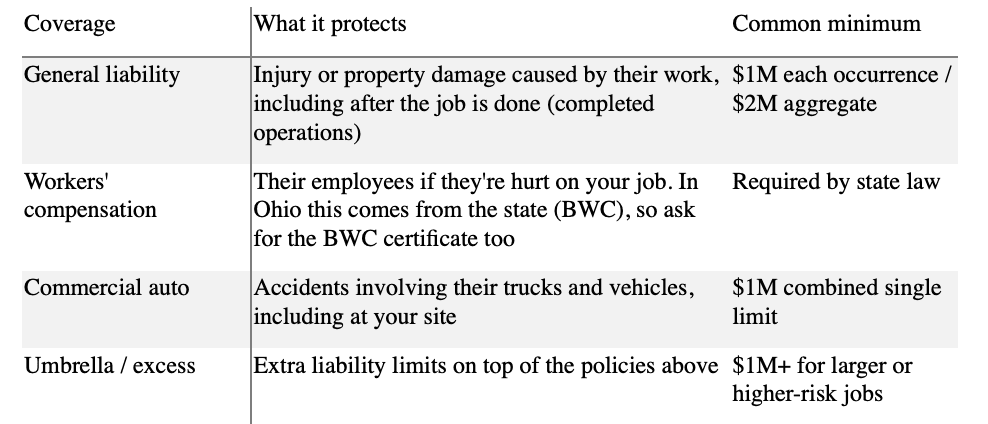
Hiring a design or consulting firm? Also ask about professional liability (errors and omissions). Bringing in a vendor that touches your data or network? Ask about cyber liability.
Three terms worth asking for
These are the requests that turn a certificate from “nice to have” into real protection for you.
-
Additional insured. Adds you to their liability policy, so if you’re sued because of their work, their insurer defends you. Ask that it cover both ongoing and completed operations, and that the endorsement page is attached.
-
Waiver of subrogation. Stops their insurance company from paying a claim and then turning around to recover that money from you.
-
Primary and non-contributory. Means their policy pays first, and your own insurance doesn’t have to chip in. That keeps claims, and premium increases, off your policy.
If you’re a business with a written contract, these should be in the contract’s insurance section. Their agent can only add what the contract or policy allows, so put it in writing before work begins.
Red flags and how to verify
Watch for these when the certificate arrives:
-
It comes from the contractor, not their agent. Ask for it to be sent directly from the agency. Certificates can be edited.
-
Dates have passed, or expire mid-job. Check the policy end dates against your project timeline.
-
The name doesn’t match. The insured name should match the business you’re signing with, not an owner’s personal name or a sister company.
-
No workers’ comp. “I don’t have employees” may be true, but get it in writing. In Ohio, ask for the BWC certificate or proof of exemption.
-
Additional insured isn’t marked. The ADDL INSD box should be checked, and you should be listed as the certificate holder with your correct name and address.
For a large job, call the agent listed on the certificate and confirm the policy is active. It takes five minutes.
Quick checklist before work begins
-
Certificate sent directly from the contractor’s insurance agent
-
General liability, workers’ comp and auto listed, with limits that fit the job
-
Policy dates cover the full project
-
You’re listed as certificate holder, with your correct name and address
-
Additional insured, waiver of subrogation and primary/non-contributory noted whereneeded
-
Endorsement pages attached for larger jobs
We can help
Not sure what limits to require, or whether a certificate you received measures up? Send it to us!The Hosket Ulen team reviews certificates and contract insurance requirements every day, and we’re happy to take a look.
And if you’re the one doing the work and need a certificate for a customer, we can usually turn those around the same day. Call 614-339-1771 or email .